Paper delivered by María Suárez at the Moving Humanities Conference, 31 October – 1 November 2024, Groningen.
Abstract
This paper examines a participatory art project led by Estefanía García Pineda in Corinto, Cauca, Colombia, where peasant and Indigenous communities collaborated to replace illicit coca and marijuana crops with handmade paper production. Through workshops that combined papermaking with storytelling, the project created a book documenting community members’ life stories, highlighting the intertwining of memory, violence, and environmental transformation. Analyzing this work through the lenses of memory activism and transformative justice, the paper argues that the project intertwines memory-making with social and ecological reparation, fostering community agency and challenging top-down conceptions of victims as passive recipients of aid. It concludes that such grassroots, art-based initiatives offer powerful models for inclusive peace-building and reparations in post-conflict contexts.
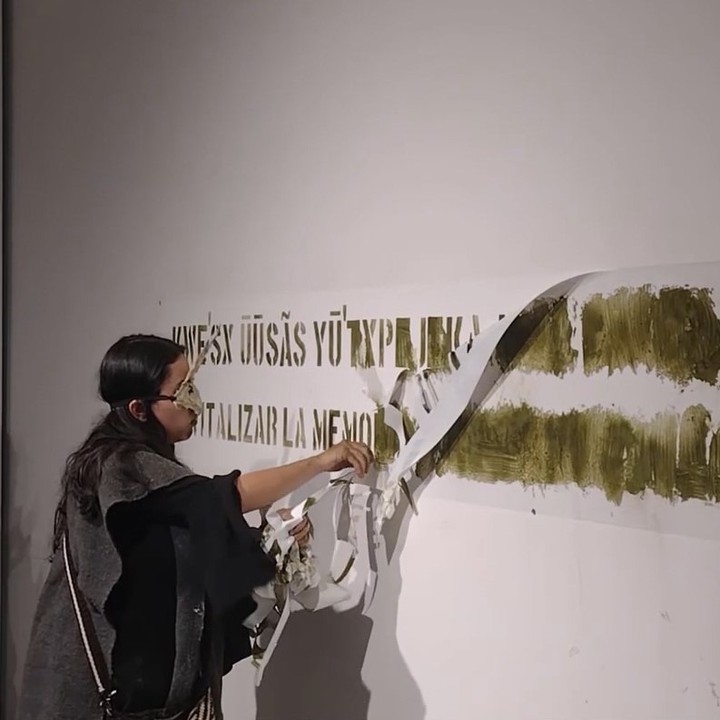
Image credit:
Tierra conejos y orígenes, 2022
Video instalación y acción con mambe
Mambe, tierra, hojas de coca y elementos animales
 Critical Heritage Ecologies